
Sex Offender Checks in San Luis Obispo County
The California Megan's Law Website, managed by the California Department of Justice, is the primary public registry for San Luis Obispo County sex offender searches. It can connect a known name to a public profile or show listed registrants near a city, ZIP code, county, or address. A place search is useful for neighborhood awareness. A name search is more precise when spelling and identity are already known.
Local police and the San Luis Obispo County Sheriff's Office do different work. They handle registration and compliance based on residence jurisdiction, but the research did not identify a separate county public registry list. Start with the statewide portal. Contact the law-enforcement agency for the registrant's residence only when an appointment, suspected failure to register, or correction needs local attention.
San Luis Obispo County Registry Choices
Choose the field that matches the question. County selection gives a broad San Luis Obispo County registry view. City or ZIP searches narrow that field to San Luis Obispo, Paso Robles, Atascadero, or another community. An address and radius search gives a proximity view when the portal offers it. Name searches work best for a person already known to the searcher.
Map and list results answer different needs. A map shows place relationships, while a list makes it easier to compare names and open profiles. Neither view should be copied into a private dossier. Public display is controlled by California law, so some location details may appear as a category rather than a full street address.
How to Search the California Megan's Law Website
The California DOJ registry supplies the public search layer for San Luis Obispo County. Read and accept its conditions before searching. Those terms matter because the system carries limits on use as well as limits on what can be displayed.
- Open California Megan's Law and accept the stated conditions of use.
- Enter a name, or choose San Luis Obispo County, a city, ZIP code, or address.
- Review map or list results carefully. Match more than one identifier before opening a profile.
- Read the full public profile, status, offense, location category, and warnings in context.
| Field Label | Type | Required | Notes |
|---|---|---|---|
| Name | Text | No | Use a first and last name where available. |
| City | Text or select | No | Try San Luis Obispo, Paso Robles, or Atascadero. |
| ZIP Code | Text | No | Enter a five-digit ZIP code. |
| County | Select | No | Select San Luis Obispo County. |
| Address and radius | Text and radius | No | Use the proximity search when available. |
| Map or List | View toggle | No | Switch the result format without changing the underlying search. |
NSOPW for San Luis Obispo County Registries
A California-only search can miss the geographic context when someone has lived or registered elsewhere. The U.S. Department of Justice's National Sex Offender Public Website provides a cross-state search layer. Use it after California Megan's Law when a known person may have crossed state lines or when a family safety check covers more than one state.
The portals are complements, not duplicates. California controls its own public fields and display rules. NSOPW connects participating jurisdiction data across the country. A difference between results calls for checking the source jurisdiction, not assuming either screen is a complete criminal record.
The official NSOPW interface is shown below as a source reference. Its wider scope helps explain why a San Luis Obispo County sex offender search sometimes needs a second channel.
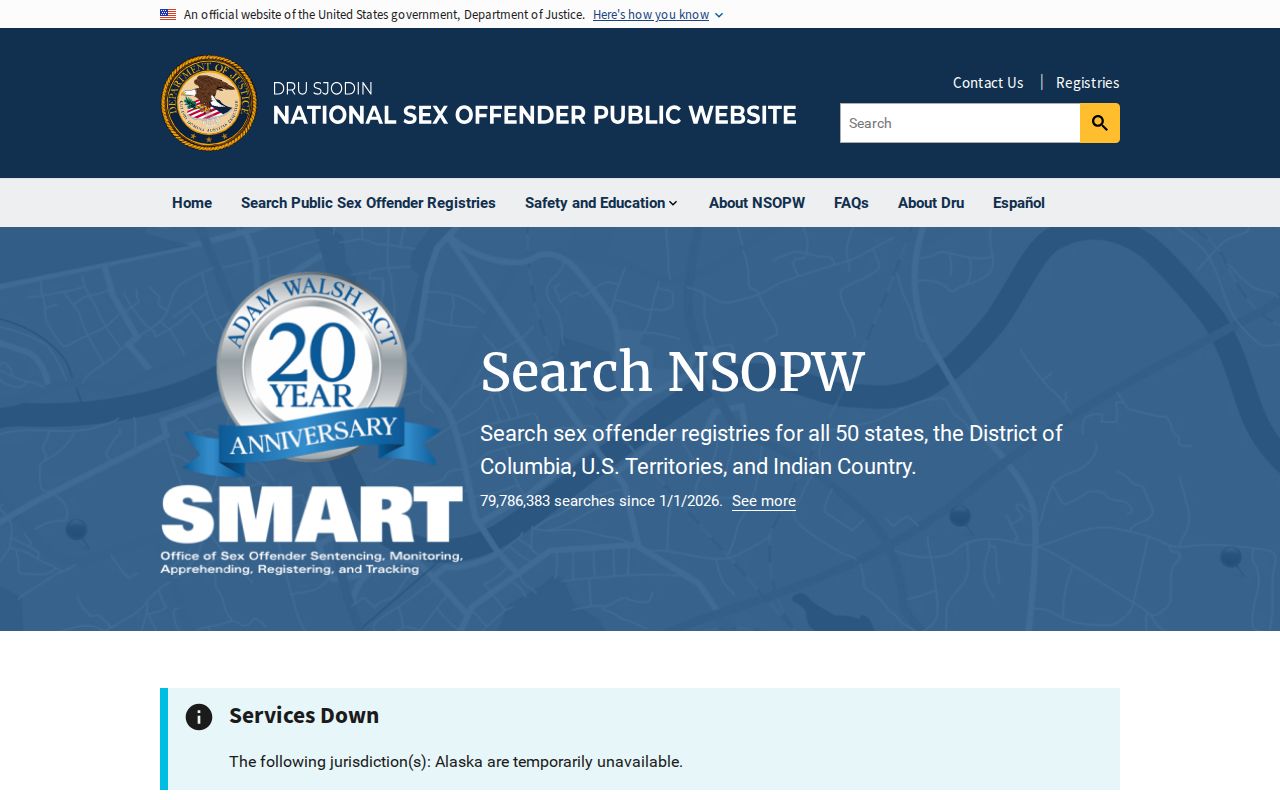
Use the national result to locate the responsible registry, then confirm the current public profile there.
Inside a Registry Profile
A San Luis Obispo County registry profile may combine identity, appearance, location, offense, and registration facts. Each field has limits. A photo or alias can help distinguish people with similar names, while an offense entry explains the registration basis. Address display may be exact, partial, or categorical under California rules.
Read several fields together before deciding that a result matches the person sought. Names can repeat, photographs can age, and a city alone is not a unique identifier. Status labels also deserve care because they report registration information, not a new finding of guilt.
| Name and aliases | Published identity names used to distinguish a profile. |
|---|---|
| Photo and description | Photograph plus available age, sex, race, height, weight, hair, eyes, and distinguishing marks. |
| Location | Address or a display category, along with county, city, or ZIP information allowed by law. |
| Offense | Public offense code, description, and conviction or adjudication details where displayed. |
| Tier information | Risk or tier facts when the public profile makes them available. |
| Registration status | Compliance or other public status information, plus warnings and update-reporting directions. |
San Luis Obispo County Registry Limits
A public registry profile is not the registrant's full police, court, or California DOJ history. Penal Code rules determine what the public can see. Some profiles may show a precise location; others may present less detail. Vehicle, employer, school, transient, or similar fields appear only when California's rules permit and the portal displays them.
This is where searches often go wrong. A missing detail does not prove the fact does not exist. It may be restricted from public display. Likewise, one listed offense does not supply every arrest, charge, dismissal, or case outcome. For broader San Luis Obispo County criminal records, use the court, booking, police-report, and subject-only DOJ channels suited to that record.
The California registry interface below is linked from the official Megan's Law source. The image frames the public system, not an individual registrant.
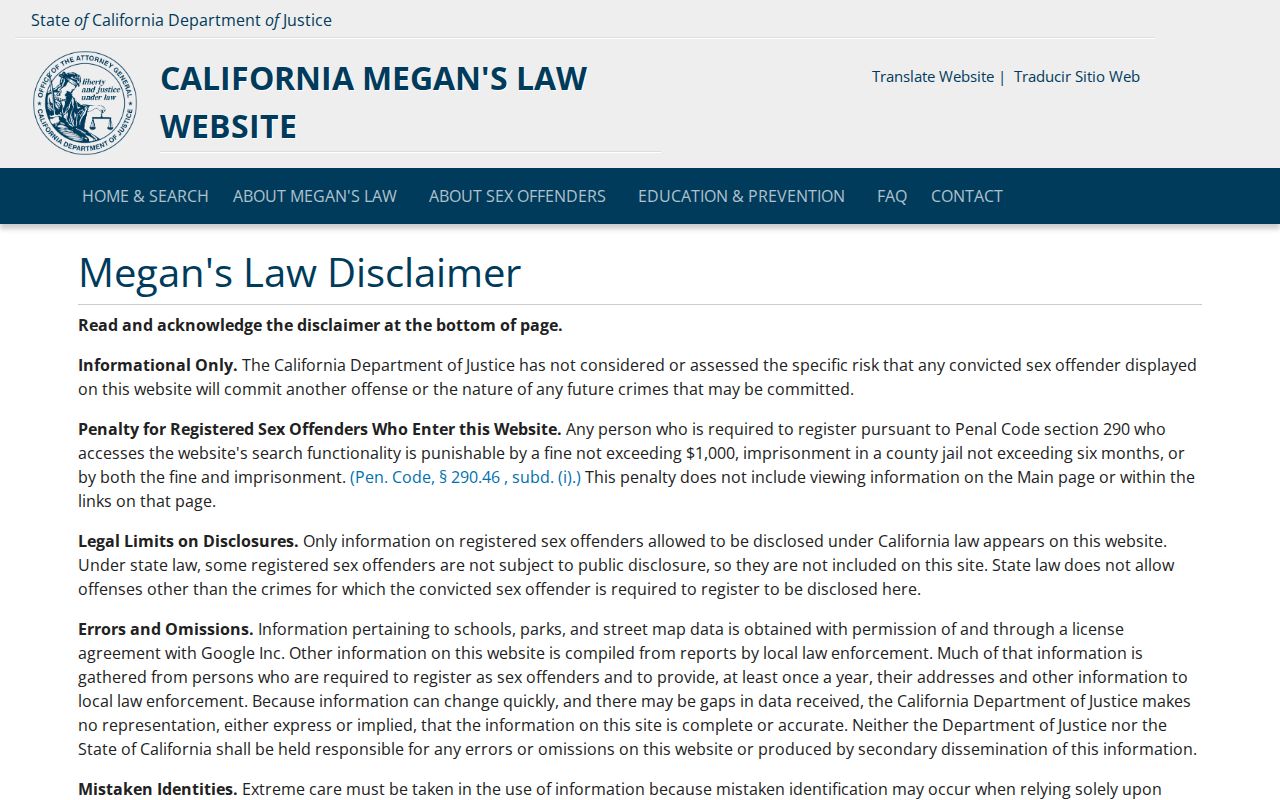
Search controls and statutory notices deserve attention before any profile is interpreted.
California Registration Levels and Requirements
California Penal Code section 290 establishes the registration framework. In plain terms, California uses three tiers. The general periods are ten years, twenty years, and life, but classification and termination depend on the offense, risk factors, and other statutory rules. No table can promise when one person's duty ends.
A stated period is not a self-executing end date. Any petition, termination, or continued duty must be resolved through the process California law assigns to the registrant and responsible agencies. Public visibility can also differ from the underlying registration duty.
| Tier | General duration | Important limit |
|---|---|---|
| Tier One | Generally 10 years | Actual classification and eligibility require an official determination. |
| Tier Two | Generally 20 years | The period does not by itself end registration. |
| Tier Three | Generally lifetime | Individual duties turn on the statute and official record. |
Local San Luis Obispo County Registration
Registration takes place through the law-enforcement agency responsible for the residence jurisdiction. County-area questions can begin with the San Luis Obispo County Sheriff's Office. Within incorporated cities, the local police department may direct appointments and updates. The research did not locate a fixed registration window, public fee, or universal counter for the county, so those details should be confirmed with the proper agency.
County Jurisdiction
San Luis Obispo County Sheriff's Office
Use the official department page for current registration routing and contacts.
City Jurisdiction
San Luis Obispo Police Department
Ask the city agency about residence-based registration directions.
Local registration is distinct from the public website. Law enforcement maintains and verifies duties; California DOJ manages the statewide public search. The linked statutory framework is pictured below from the official California code source.
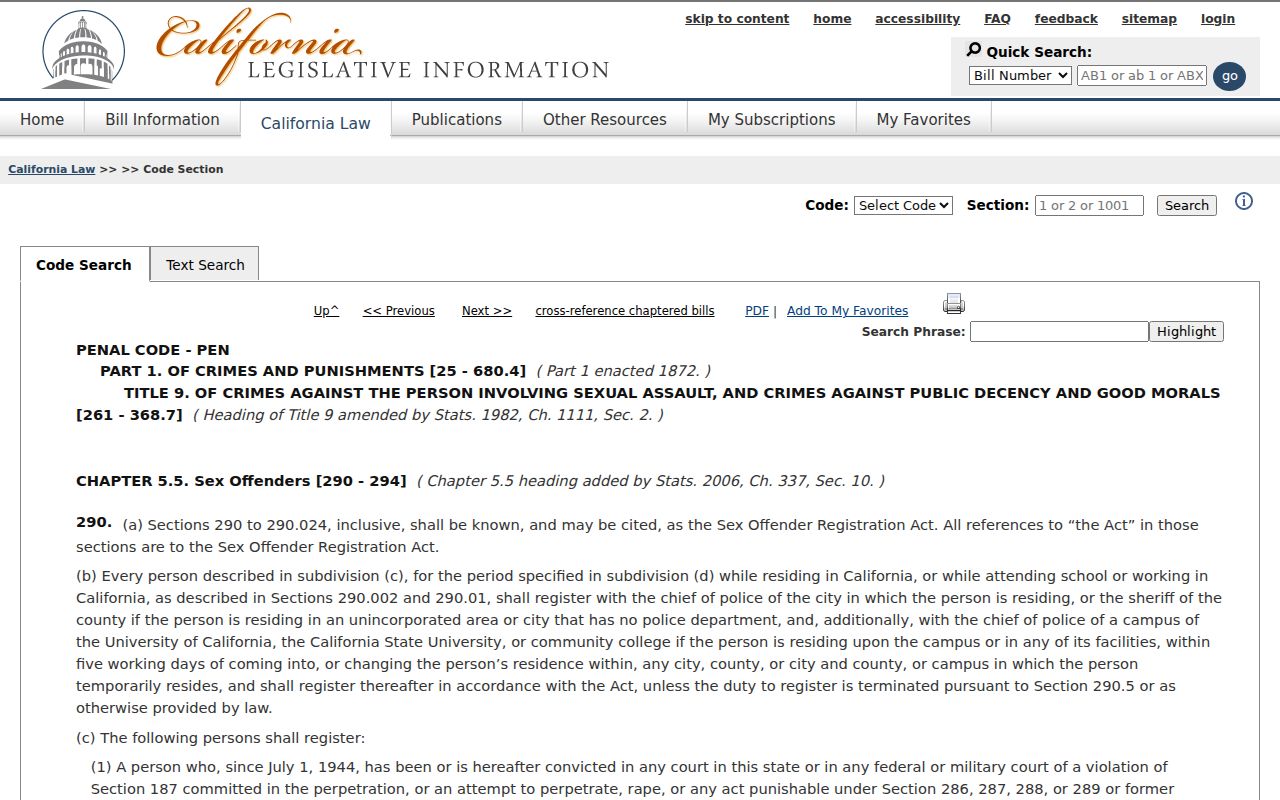
The code is the authority for duties; agency instructions govern current local appointment mechanics.
Report San Luis Obispo County Registry Problems
Suspected non-compliance and suspected data errors call for different reports. For an urgent safety concern, use the proper local law-enforcement channel. For a person living in county jurisdiction, contact the Sheriff's Office. Within a city, contact that city's police department. Do not confront the person or attempt an independent compliance check.
When the concern is an incorrect public profile, follow the reporting or update directions shown by California Megan's Law or contact the responsible agency. Note the profile link, the field believed to be wrong, and the source of the correction. For a cross-state mismatch, use NSOPW to identify the registry that owns the source data.
Community Notification and Lawful Use
Registry access supports personal, family, and neighborhood safety. Use a San Luis Obispo County sex offender search to understand public information, plan sensible precautions, and identify the agency to contact about a real concern. It does not authorize punishment, confrontation, or the spread of unverified claims. Community awareness should stay tied to the fields California law makes public.
The statutory warning itself is available through Penal Code section 290.46. The official code page shown below gives the legal frame for the Megan's Law site and its misuse limits.
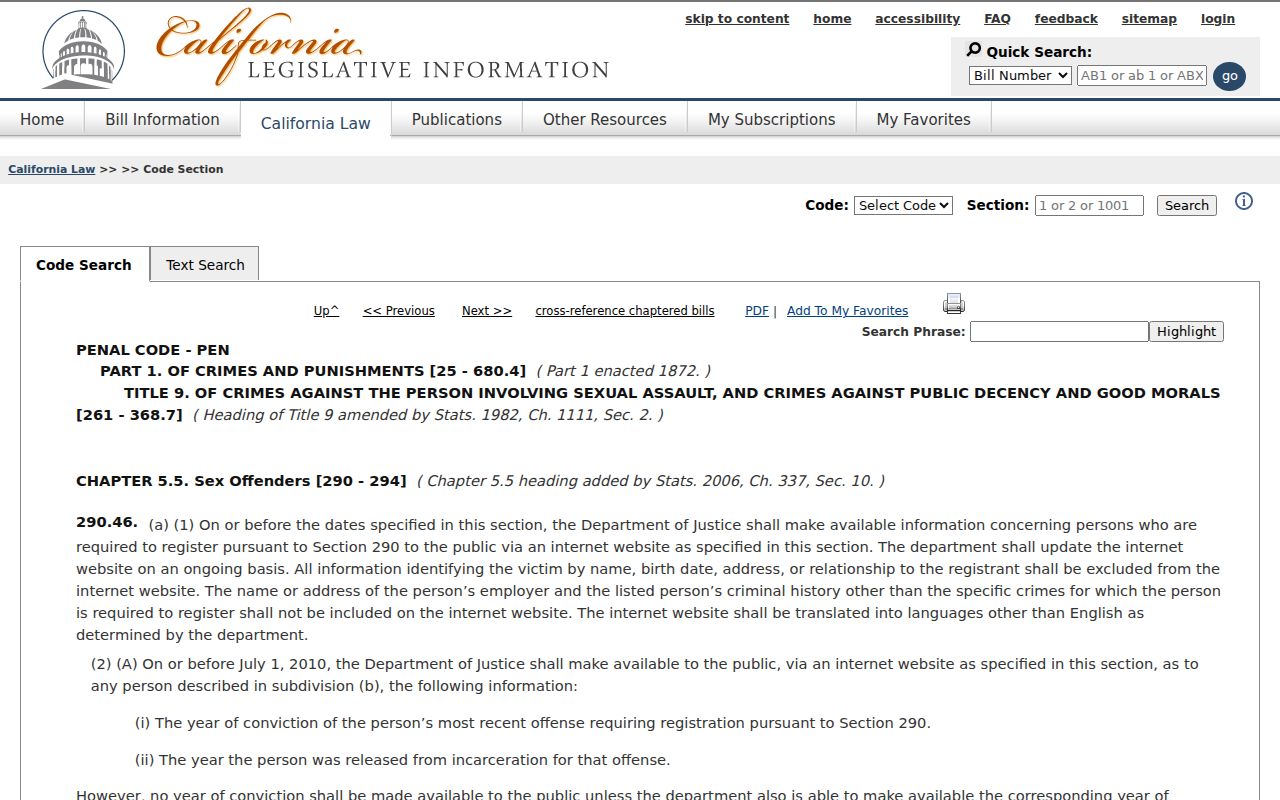
That warning applies to every name, map point, and profile opened through the public registry.
Registry misuse is a crime: Penal Code section 290.46 restricts using registry information to commit a crime or to harass, intimidate, or threaten a registrant or family member. Use it only for lawful public-safety awareness.