
San Luis Obispo County Criminal Court Cases
California's unified trial-court system places felonies, misdemeanors, and criminal traffic matters in the Superior Court of California, County of San Luis Obispo. There is no separate county criminal court or modern municipal criminal court. Once a complaint, information, indictment, or citation is filed, the clerk keeps the case number, docket, hearing calendar, filed charges, orders, and disposition.
The Superior Court Criminal Division explains the local criminal branch. A city police case still becomes a San Luis Obispo County Superior Court case if a prosecutor files charges. The Sheriff remains the source for its arrest report and booking record, while the court owns the judicial file.
San Luis Obispo Criminal Trial Court
The Superior Court records arraignments, pleas, pretrial motions, felony preliminary hearings, trials, sentencing, probation reviews, warrants, and later relief. The District Attorney reviews law-enforcement reports and decides what charges to file, but the prosecution file is not the official docket. Likewise, the Public Defender may represent an eligible defendant, yet it is not a public records counter for another person's file.
This division of custody matters when charges change. A booking may use the arresting officer's initial code. The complaint can allege different counts, and later court events may amend, reduce, dismiss, or resolve them. The filed case and its event list provide the best public path for following those changes.
Searching San Luis Obispo County Case Records
The court's case information route directs public users to re:SearchCA. Use a case number whenever possible. A name search can return several people, so confirm the court, filing date, case category, and available party details before relying on a match.
- Open the Superior Court case-information route and continue to re:SearchCA.
- Enter the case number, or search the party name and select San Luis Obispo Superior Court.
- Compare the filing date and criminal case type to avoid merging similar names.
- Read charges, events, hearings, disposition, and financial sections as separate parts of the file.
- Ask the clerk about copies, certification, an older file, or a public item that is not downloadable.
| Search field | Best use | Check before relying | Local note |
|---|---|---|---|
| Case number | Direct match | Number format | Best identifier |
| Party name | Find an unknown number | Filing date | Common names need care |
| Court | Limit results | County selection | Choose San Luis Obispo |
| Case type | Separate record classes | Criminal category | Check traffic-criminal too |
| Filing year | Narrow similar results | Whether filing occurred | Recent arrests may lag |
re:SearchCA Fields for San Luis Obispo Cases
re:SearchCA can show a case caption, court, type, filing date, status, parties, attorneys, charges, hearings, events, and selected financial information. Some docket entries are visible when the underlying document is not. Access may require an account or a court request, and restricted documents will not become public merely because a docket entry exists.
The official San Luis Obispo criminal division is the local source for criminal-branch guidance.
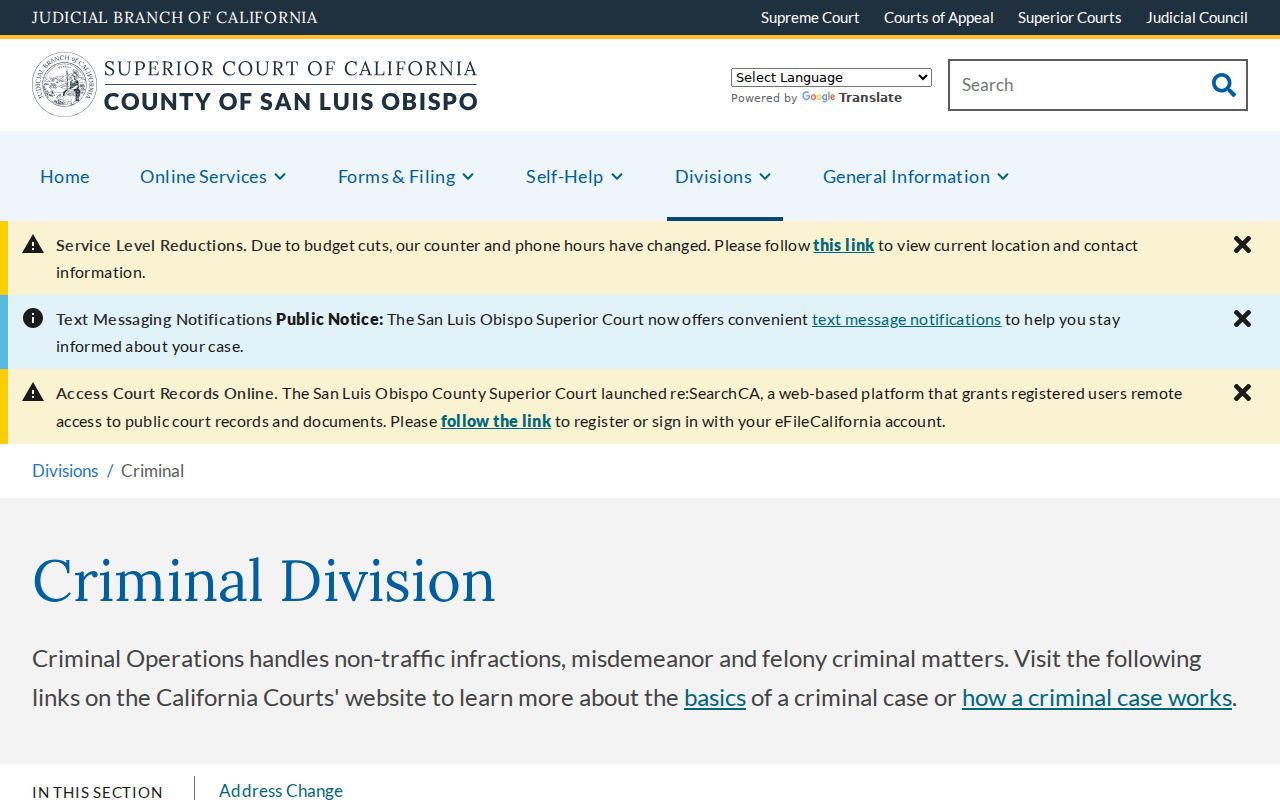
The court page supplies local context that a statewide result alone may not convey.
Inside a San Luis Obispo County Case File
A case file is a timeline, not one verdict field. Read the charge rows with the event list and final orders. An open status may mean the matter is pending, while a closed or disposed label requires the count-level outcome to understand what happened.
Party and attorney fields help confirm the correct file, but they do not settle the outcome. Review each count. One charge can be dismissed while another ends in a plea or judgment. Financial views may show fines, assessments, restitution, or payments when the portal enables them. Hearing entries may list a date, time, department, and event type without giving the full minute order. When the exact language matters, request the filed document from the clerk.
| Case Number & Court | The stable identifier and San Luis Obispo Superior Court location. |
|---|---|
| Charging Document | The complaint, information, indictment, or citation that begins the case. |
| Docket Entries | A dated list of hearings, motions, minute orders, warrants, and filings. |
| Hearing Dates | Scheduled events with time, department, and event type when public. |
| Disposition & Judgment | The result for each count, including conviction, dismissal, or acquittal. |
| Sentence & Conditions | Jail, prison, probation, fines, restitution, and other ordered terms. |
San Luis Obispo DA Portal Comparison
San Luis Obispo County has an unusual extra channel: the District Attorney public portal. It can help identify prosecution-side case information when a search is unclear. It does not replace re:SearchCA or a clerk-certified copy. The District Attorney decides whether to file charges and handles the prosecution, while the Superior Court records what was formally filed and what the judge ordered.
For a recent arrest, the Sheriff's booking log may appear first. The DA portal can follow during review, and a court result appears only after filing. When the channels conflict, compare identifiers and verify the filed status with the court. The broader handoff is covered in the county arrest lookup.
How a Criminal Case Moves
A report or citation starts outside the court. The prosecutor may file, reject, or revise a case after review. Once filed, the defendant is arraigned and enters a plea. Pretrial work can include motions and, in many felony cases, a preliminary hearing. A plea or trial resolves the disputed charges, followed by disposition and sentencing.
Case flow: Charges Filed › Arraignment › Pretrial › Plea or Trial › Disposition › Sentencing
Reading San Luis Obispo Docket Events
An arraignment is the first hearing for the filed charges. A minute order is the court's short record of what occurred at a hearing. A disposition is the current or final outcome of a count, while sentencing states the punishment and conditions after judgment. A bench warrant often reflects a missed hearing or violation of a court order, not a new conviction.
California also treats some offenses as wobblers. Such an offense can be charged or reduced as a felony or misdemeanor based on its statute and the court's action. Compare the arrest level, filed count, plea, and final disposition instead of assuming the first label remained in force.
The official local forms page was captured as a current form source.
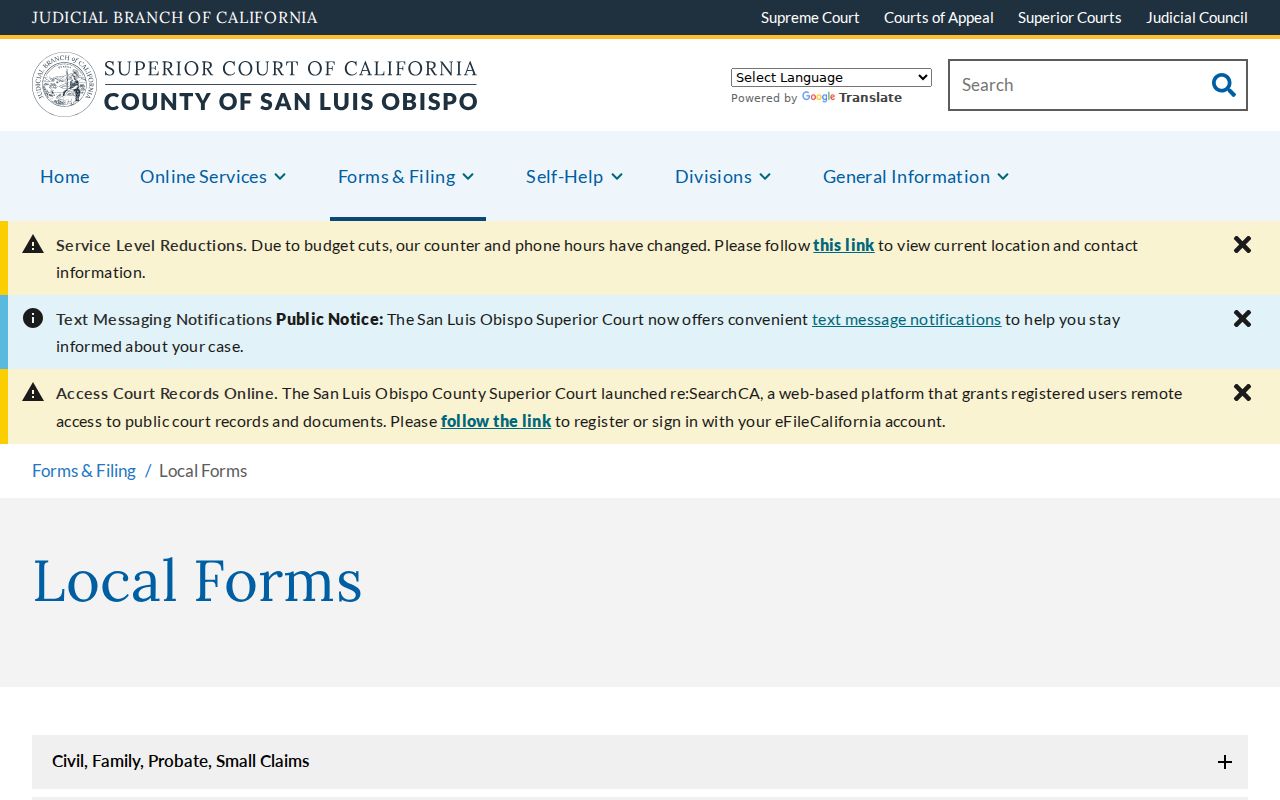
Current clerk instructions control when a state form, local form, or copy request is needed.
San Luis Obispo Certified Case Copies
A portal display helps with research, but it is not always the document needed for a formal purpose. Contact the Superior Court clerk through the official locations page for copies or certification. Give the case number, requested document, and delivery preference. Fees and branch procedures can change, so no unsupported amount is stated here.
For a federal matter, use PACER and the U.S. District Court for the Central District of California. PACER is separate from San Luis Obispo Superior Court and may charge under federal policy.
The official PACER service supplies the federal docket layer.
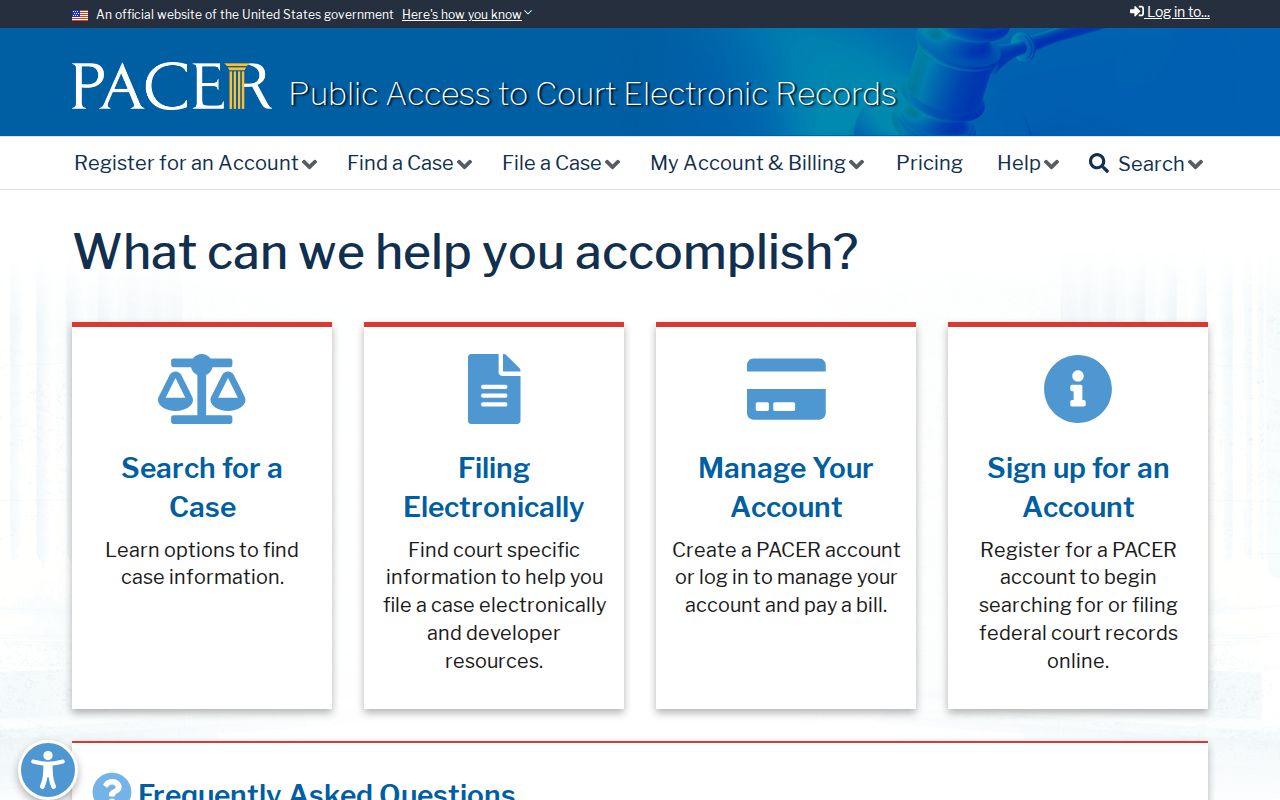
PACER applies to federal cases, not the local Superior Court docket.
Case Record Access & Restrictions
California court records follow public-access rules, but not every case or document is open. Juvenile matters, sealed cases, confidential victim information, protected identities, and some medical or private data can be withheld or redacted. Online access can be narrower than access at the clerk's counter, yet a counter request does not override a sealing law or court order.
If no result appears, check spelling and case type, allow time after a new arrest, and ask the clerk about older records. A missing web result does not prove that no record exists. It can also reflect sealing, a filing delay, a different jurisdiction, or a search mismatch.
The California Rules of Court access framework governs the public court-record layer.
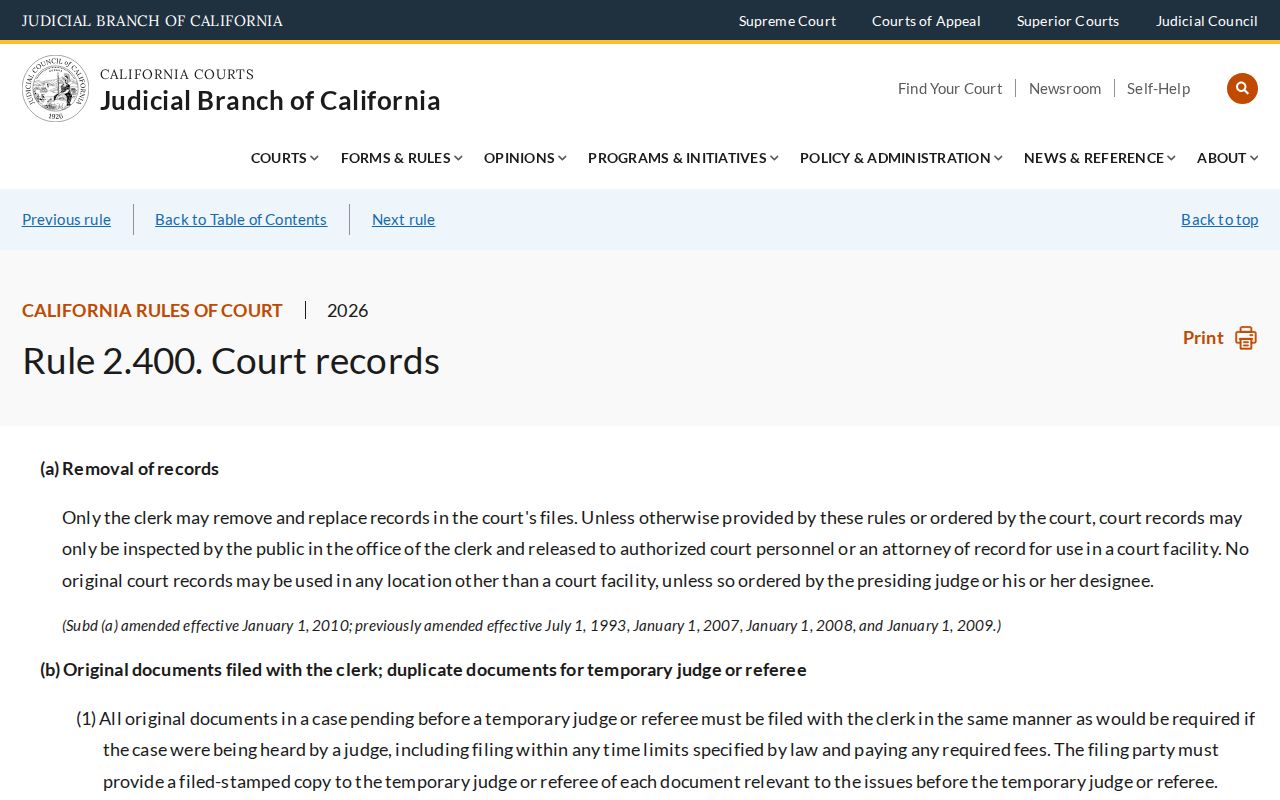
Those rules explain why a public docket may still omit a sealed document or private field.