
Checking Criminal History in San Luis Obispo
San Luis Obispo criminal records sit in several offices because each office documents a different event. Start with the San Luis Obispo Police Department when the event was handled by SLOPD. Move to the Sheriff-Coroner only when an arrest led to a county jail booking. Use the Superior Court for filed charges, hearings, warrants, and outcomes. A person reviewing their own statewide record must use the California Department of Justice fingerprint process rather than a public name search.
- Ask SLOPD Records for the incident, collision, arrest, dispatch, audio, or video record held by the city.
- Give the report number when known. Otherwise provide the date, time, place, involved party, and exact record type.
- Check the Sheriff booking log if SLOPD transported the person to county jail.
- Search re:SearchCA after a complaint or citation reaches the unified Superior Court.
- For self-review across California, follow the DOJ Record Review Live Scan route.
San Luis Obispo Police Record Handoff
An SLOPD report does not move into one universal file. The police report remains with the city. Booking facts belong to the Sheriff, while filed charges and later rulings belong to the Superior Court. That split explains why one name can yield a police report but no court result, or a jail entry before a case number exists.
Keep each identifier separate. A report number helps SLOPD find its incident file. A booking number identifies the jail intake. A court case number follows the filed prosecution. District Attorney portal data may add prosecution-side context, but the court docket controls the official case status. Searchers get better results when they carry each number to the office that issued it.
San Luis Obispo Police Department Records
The San Luis Obispo Police Department is the first custodian for incidents investigated by city officers. Its records channel covers incident and arrest reports, SLOPD collision reports, call records, and related media when disclosure rules allow release. It is not the place for a Sheriff report, a Cal Poly police file, or a CHP collision record.
A useful request names the record with care. Include contact details, the report or incident number, the date, time, and location if the number is unknown, and the requested type. A requester’s role may matter because victim, witness, juvenile, medical, and active-investigation details can be withheld or redacted. The records unit determines what can be released under California law.
San Luis Obispo Campus Record Routes
San Luis Obispo is both the county seat and home to Cal Poly. The badge and location determine the custodian. SLOPD holds its city reports, campus police hold reports they created, CHP holds its highway enforcement files, and the Sheriff holds records from its own jurisdiction. A downtown event and a campus-adjacent event can therefore take different request paths even when they occur close together.
Start with the agency named on the citation, report receipt, or case entry. If that is unclear, a court docket may show the arresting or citing agency after filing. Do not ask SLOPD for a report solely because the event happened within the broader San Luis Obispo area.
San Luis Obispo Arrests and Bookings
SLOPD arrests that require jail intake are booked through the San Luis Obispo County Jail. The city keeps the arrest and incident report, but the Sheriff’s log records the jail event. A booking entry may list the intake time, arresting agency, booking-level charges, bail, custody status, and release information. Those entries describe intake, not guilt.
Timing matters. A new booking may appear before the District Attorney files a complaint and before re:SearchCA shows a court case. A release may also occur before every public view refreshes. Confirm current custody with the Sheriff and treat later Superior Court charges as distinct from the allegations listed at booking. The countywide arrest lookup explains those channels in more depth.
When San Luis Obispo Cases Lag
A city report can exist even when no criminal case appears online. Police create the incident file first. Prosecutors then decide whether and what to file, and the court creates a docket only when a complaint, citation, information, indictment, or other qualifying filing arrives. A declined, pending, or noncriminal matter may never produce the expected criminal docket.
If SLOPD confirms a report but re:SearchCA has no match, check the spelling, search by case or citation number when available, and limit the location to San Luis Obispo Superior Court. Then allow for filing delay. The police records unit can address the city report, while only the clerk can confirm whether the court has opened a case.
Municipal Court Records in San Luis Obispo
San Luis Obispo has no separate municipal criminal court. California unified its trial courts, so criminal and traffic-criminal matters from the city go to the Superior Court of California, County of San Luis Obispo. City parking or administrative citations may follow city processes, but they are not substitutes for the criminal docket.
| Court Name | Superior Court of California, County of San Luis Obispo |
|---|---|
| Case Types Heard | Felonies, misdemeanors, and traffic-criminal matters filed from city incidents |
| Case Lookup Channel | re:SearchCA, followed by the Superior Court clerk for records not shown online |
| What the Docket Shows | Filed charges, hearings, pleas, motions, warrants, disposition, sentence, and public documents |
| Copies & Fees | Request through the clerk; verify current copy and certification charges before ordering |
San Luis Obispo Court Access Advantage
As the county seat, San Luis Obispo places city records near the county’s main justice offices, but physical proximity does not merge custody. SLOPD still controls its police files. The Sheriff controls jail and booking data. The Superior Court clerk controls the case file, and the District Attorney maintains its prosecution records.
This distinction helps with older files and restricted online results. Contact the agency that made the record rather than sending one broad request to several offices. For court branches and current public counters, use the Superior Court locations page.
Where San Luis Obispo Records Go
An SLOPD event can generate a city report, a county booking, a prosecution file, and a court docket. Fingerprint-based arrest cycles and reported dispositions may then reach the state repository. Each layer has its own purpose and update time.
Record flow: San Luis Obispo Police Department › San Luis Obispo County Jail › Superior Court › California Department of Justice
Use the earliest custodian for recent facts and the later custodian for final outcomes. The DOJ layer is not a public people-search portal. It provides fingerprint-based self-review and authorized statutory checks.
San Luis Obispo Population Context
The official Census QuickFacts comparison places San Luis Obispo among the county’s three largest incorporated cities. Population rank helps explain why SLOPD is a major local custodian, but it does not establish crime levels or prove anything about one person.
The Census source shows the city and county side by side. Crime trends should instead be checked through official justice data by agency and year. The image below preserves the demographic source context.
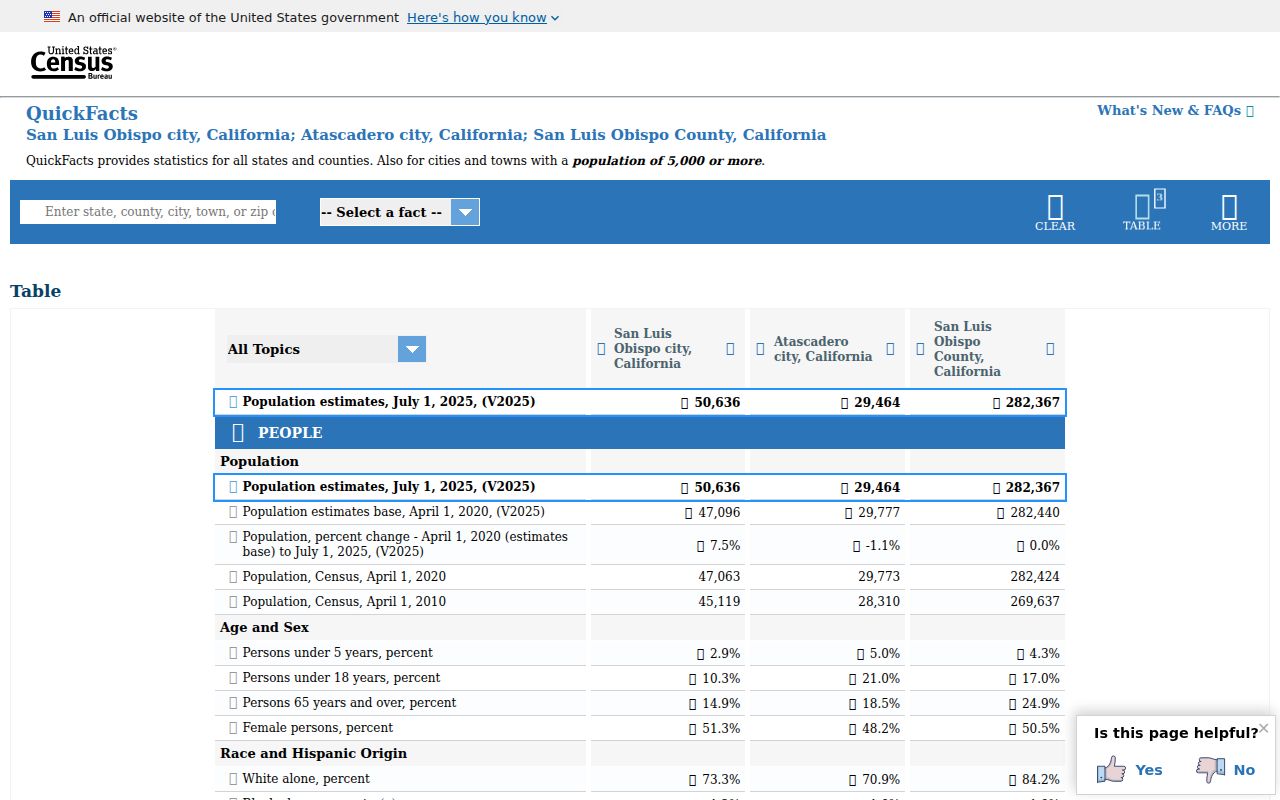
That comparison is useful for scale while official police, court, and DOJ systems remain the sources for records.
San Luis Obispo Booking Log Differences
A police report and a Sheriff booking entry are not duplicate views. SLOPD describes the alleged incident and investigation. The booking log records county jail intake, custody, listed charges, bail, and release details. One can exist without the other being public online.
Use the police report number with SLOPD and the booking details with the Sheriff. When charges are filed, move to the Superior Court docket for the legal case and outcome. Keeping those layers apart prevents a booking allegation from being mistaken for a conviction.
The District Attorney public portal can add a prosecution-side check, yet it still does not replace the court file. A name match should be tested against dates, agency, and case number. Common names and data-entry differences can otherwise join unrelated events. When the web views conflict, ask the issuing office to confirm its own entry rather than choosing the result that looks newest.
Older, sealed, juvenile, or non-indexed San Luis Obispo records may not appear through the ordinary public search. The absence of a web result does not prove the underlying event never existed. It means the searcher should use the clerk or records unit, state the precise record sought, and accept that privacy law may bar release. A person correcting their own DOJ record follows the DOJ Record Review challenge instructions, not a city police editing process.
Public Access Rules in San Luis Obispo
The California Public Records Act governs requests to SLOPD and other city offices, subject to exemptions. It does not force release of sealed, juvenile, victim, medical, or protected investigative material. Court access follows California court rules, while DOJ criminal-history dissemination follows a separate statute. Ask the correct custodian and expect lawful redactions.
Key Statutes:
California Public Records Act - provides the general route for city records requests, subject to exemptions.
Penal Code section 11105 - limits who may receive California DOJ criminal-history information.
California Rules of Court 2.400-2.551 - govern public access and sealing in court files.