
Checking San Luis Obispo County Criminal History
There is no single San Luis Obispo County search that joins police reports, jail bookings, court filings, warrants, and the California DOJ repository. Start by deciding what event needs to be confirmed. A new arrest is most likely in the Sheriff-Coroner's booking log. A filed criminal matter belongs in the Superior Court record on re:SearchCA. A police report remains with the agency that investigated the event. A statewide review of your own fingerprint-linked history goes through California DOJ Live Scan.
Collect the full name, spelling variants, approximate date, city, and any report, booking, or case number before searching. A number is more reliable than a name, especially when two people share a name. Keep results from each system separate until dates, agencies, and identifiers line up.
- Choose the court, booking, warrant, police-report, or subject-only DOJ channel that fits the event.
- Search with the best identifier available, using a date range and agency when the service allows it.
- Compare the result's event date, case or booking number, and originating agency before treating it as a match.
- Open the underlying docket, booking entry, or agency request process for the detail the index does not show.
- Ask the record-holding office for a certified copy when an official court document is required.
California Official Background Checks
The California Department of Justice, Bureau of Criminal Information and Analysis, maintains the central fingerprint-based repository. California does not offer the general public a name search for someone else's statewide rap sheet. A person who wants to review their own record uses the DOJ Record Review process and submits fingerprints through Live Scan. The response is subject-only and is not the same as a San Luis Obispo County court or jail search.
Authorized applicant checks for licensing or other purposes defined by law run through approved applicant agencies and California DOJ. The public search widget is not an official check and must not be used for a purpose regulated by the Fair Credit Reporting Act. The official route depends on the legal reason for the request.
The California DOJ record-review page shows the current subject-only process.
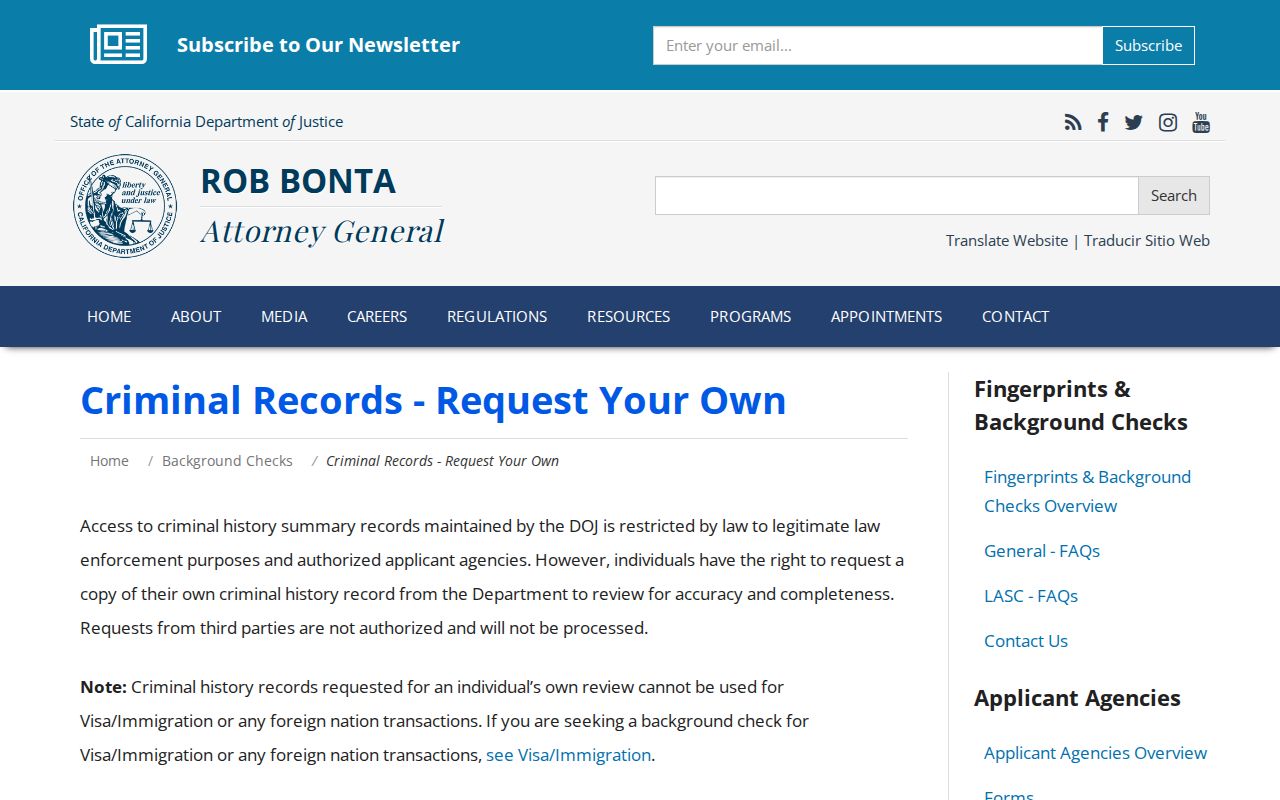
That state response can reveal fingerprint-linked cycles beyond San Luis Obispo County, while a county docket supplies the local filed-case detail.
Search San Luis Obispo Court Records
The Superior Court of California, County of San Luis Obispo is the unified trial court for local felony and misdemeanor cases. Its online case-information page routes users to re:SearchCA. Search by party name when no case number is known, then narrow with case type, court, filing range, or other available filters. Once a likely result appears, compare the event list and case number before ordering a copy from the clerk.
| Search field | Best use | Limit |
|---|---|---|
| Party name | Finding a case without its number | Common names can return several people |
| Case number | Opening the exact docket | Must match the court's format |
| Case type | Narrowing results to criminal matters | Does not prove identity by itself |
| Filing range | Separating older and newer matters | A recent booking may not yet be filed |
| Court or location | Focusing on San Luis Obispo County | Restricted matters may not appear |
The San Luis Obispo Superior Court homepage is the official local starting point for current case-access directions.
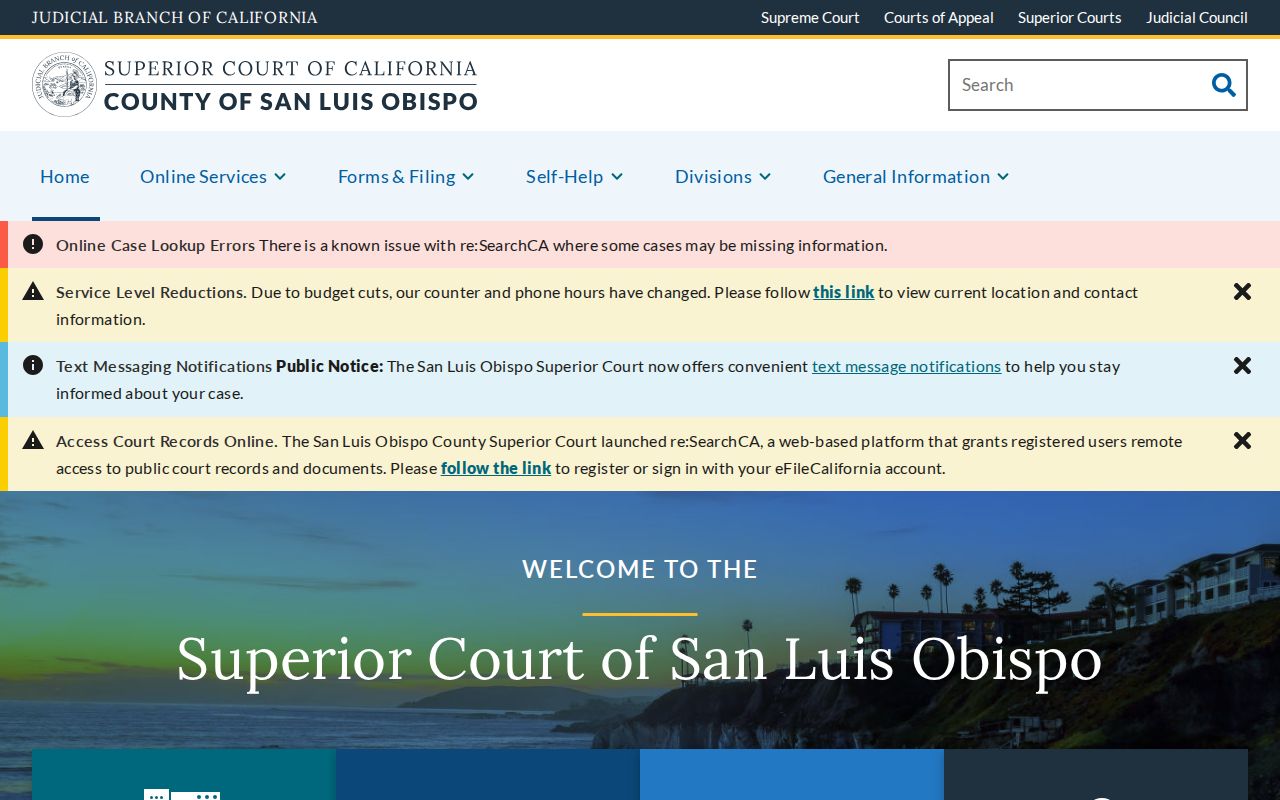
For charges, hearings, pleas, dispositions, and sentences, the court record carries more authority than a booking or prosecution-side summary.
Criminal Record Types
San Luis Obispo County records are divided by the office and stage that created them. Knowing that division prevents a quick online result from being read as a full criminal history.
The Sheriff-Coroner and city police departments create enforcement records. The jail creates booking and custody entries. The Superior Court creates the case file. Probation maintains county supervision records, while CDCR handles state prison custody and parole supervision.
- Arrest and booking records identify the arresting agency, booking event, listed charges, bail, and custody facts.
- Criminal court case files track filed charges, hearings, pleas, motions, judgment, and sentence.
- DOJ criminal-history entries connect fingerprint-based arrest and disposition cycles reported across California.
- Warrant records can arise from an investigation, a missed court date, or a supervision matter and require official verification.
- Supervision and registry records come from county probation, CDCR parole, and the California Megan's Law system.
San Luis Obispo Booking Log Comes First
The Sheriff-Coroner publishes a separate booking log on slosheriff.org. It is often the first public record of a recent county jail event. Search fields include name and booking-date information, while a result can show a booking number, arresting agency, booking date, listed charge, bail, and custody or release data. Those fields describe intake, not guilt or the final charge chosen by a prosecutor.
Open the official Sheriff's booking log when the event is too new for the court docket.
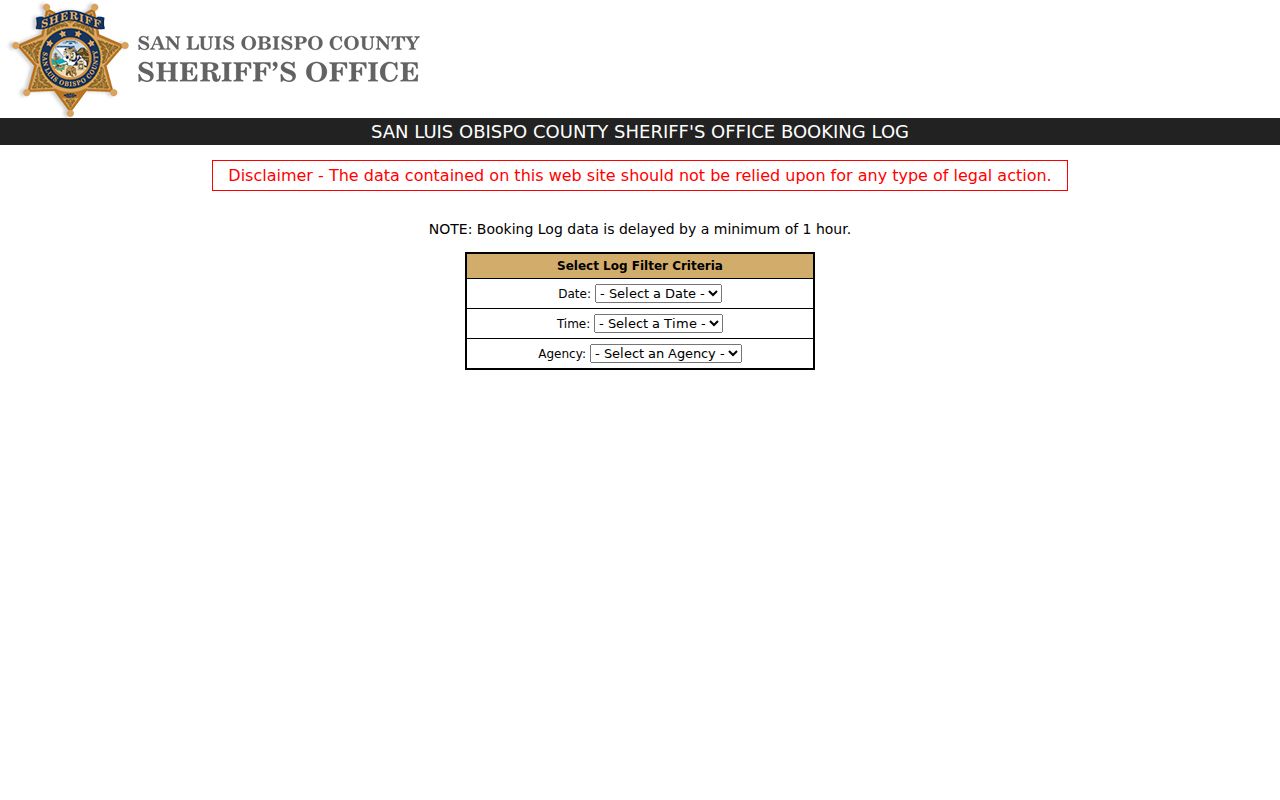
If the entry later disappears or the person was released, request the appropriate booking or arrest record from the Sheriff-Coroner or the arresting police department and check re:SearchCA for a later filing.
Inside a San Luis Obispo County Criminal Record
The fields depend on the source. A court file uses filed charges and event entries; a jail log uses booking-level information; a DOJ response may join statewide arrest and disposition cycles. Read the heading and custodian before reading the fields.
| Name & Identifiers | Name variants, date of birth where public, agency numbers, and case or booking numbers used to distinguish records. |
|---|---|
| Arrest / Booking Data | Arresting agency, event and booking dates, jail intake, bail, release, and custody status. |
| Charges & Statutes | The alleged or filed offense, California code citation, degree, and later amendments. |
| Disposition | Dismissal, acquittal, plea, conviction, or another outcome entered by the court. |
| Sentence | Custody, probation, fines, programs, and other terms ordered in the judgment. |
| Custody / Supervision Status | County jail status, state prison location, probation, or parole information held by the responsible agency. |
Choose the Right San Luis Obispo Custody Locator
Custody location changes the search. The Sheriff-Coroner handles San Luis Obispo County Jail bookings. The California Department of Corrections and Rehabilitation uses CIRIS for people in state prison custody. The Federal Bureau of Prisons has a separate locator for federal custody. VINELink adds custody notifications where participating agencies supply data, but it does not replace the originating jail or prison record.
The official CDCR California Incarcerated Records and Information Search is the state-prison channel.
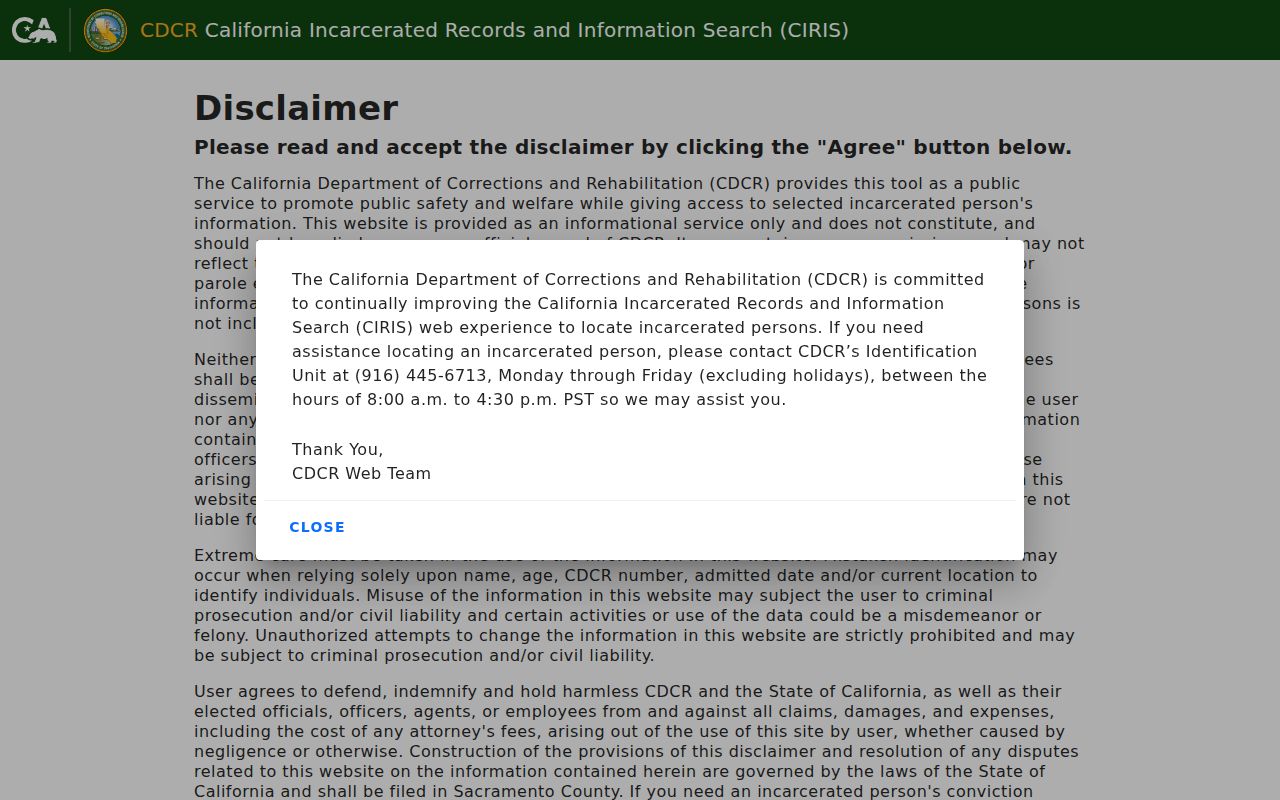
A result there indicates CDCR custody, not a current San Luis Obispo County jail booking. Move back to the court docket to confirm the conviction and sentence that produced the custody term.
Public Access Laws in California
California separates public agency records, court records, and confidential criminal-history repository data. The California Public Records Act supplies a route to request many Sheriff-Coroner and city records, subject to exemptions and redaction. Court access follows judicial rules and sealing orders. Penal Code section 11105 limits dissemination of state summary criminal-history information.
Key Statutes:
Government Code § 7920.000 et seq. establishes the California Public Records Act framework.
Penal Code § 11105 controls access to and dissemination of California summary criminal history.
Penal Code § 1203.4 permits qualifying conviction dismissals without erasing every effect of the record.
Penal Code § 851.91 provides a petition route to seal qualifying arrest records.
Penal Code § 290.46 governs the public Megan's Law website and restricts misuse of its information.
Verify San Luis Obispo County Warrant Results
The Sheriff's warrant log is a useful first check, but a warrant can change between a web refresh and a search. A bench warrant may arise from a missed Superior Court appearance, while another warrant can be linked to an investigation or probation violation. Never act on a name-only match. Compare identifiers, then confirm status with the Sheriff's Office or the Superior Court before relying on it.
When no public result appears, use the Sheriff-Coroner's public-records route for records it can release and ask the court clerk about court-issued warrants connected to a known case. The District Attorney portal can help identify a prosecution matter, but it is not the warrant authority or final docket.
Sealed, Expunged, and Restricted Records
California uses several forms of relief rather than one rule that wipes every record away. A qualifying conviction may be dismissed under Penal Code section 1203.4. Arrest records can qualify for petition-based sealing under section 851.91, and sections 851.93 and 1203.425 provide automatic relief for qualifying arrests and convictions. Juvenile, sealed, victim-sensitive, and other protected material may be absent or redacted from a public San Luis Obispo County search.
A 1203.4 dismissal does not erase the historical case or remove every legal consequence. The court file, DOJ response, and public portal may also update on different schedules. Use the Superior Court order and a new DOJ review of your own record to check whether relief was applied where it should be.
San Luis Obispo County Record Custodians
Directing the request to the office that created the record saves time and reduces broad searches. Current addresses, public-window details, and hours can change, so use each official department page before visiting.
Superior Court
Filed criminal dockets, documents, judgments, and certified court copies. Use the court locations page for current branch details.
Sheriff-Coroner
County jail bookings, custody records, warrant logs, and releasable Sheriff reports. Start at the official department page.
District Attorney
Prosecution-side case information and the county public portal. Confirm filed events and outcomes in the court record.
City Police
Incident, arrest, collision, call, and media records created by San Luis Obispo, Paso Robles, or Atascadero police.
The San Luis Obispo County government directory connects readers to the county offices in this record chain.
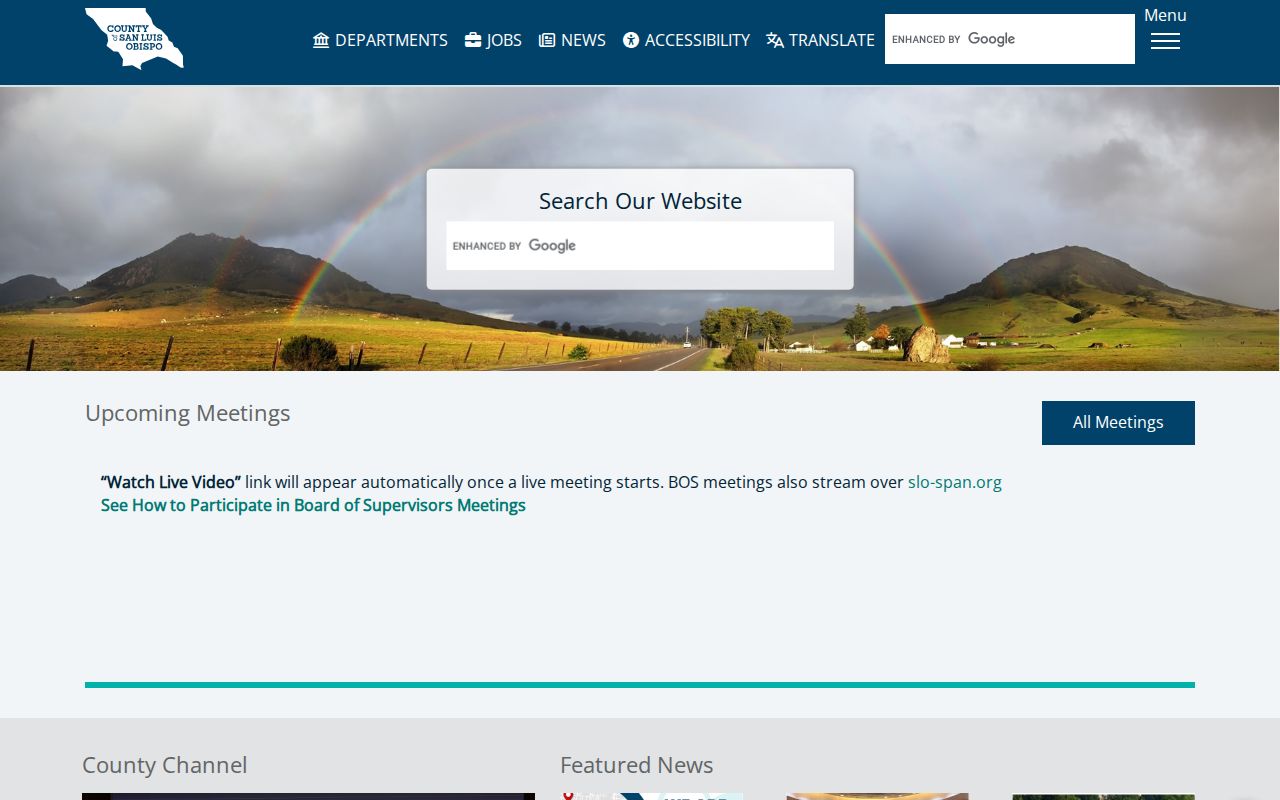
The directory is most useful when a record falls outside the court, jail, and police channels, such as county probation information.
San Luis Obispo County Criminal Records by City
San Luis Obispo, Paso Robles, and Atascadero each have a police department or city request channel for locally created reports. California no longer uses separate municipal criminal courts here. Once prosecutors file a city arrest or citation, the case belongs to the Superior Court of California, County of San Luis Obispo. County jail bookings appear through the Sheriff-Coroner regardless of which city police agency made the arrest.
San Luis Obispo Criminal Records
SLO Police reports · county jail bookings · Superior Court cases
Paso Robles Criminal Records
PRPD Records Bureau · North County arrests · county court routing
Atascadero Criminal Records
Atascadero city requests · Sheriff booking log · re:SearchCA cases
Agency Names Matter in San Luis Obispo County
The county's coast, U.S. 101 corridor, Cal Poly area, and city boundaries can place similar incidents in different systems. San Luis Obispo Police, Paso Robles Police, Atascadero Police, the Sheriff-Coroner, California Highway Patrol, campus police, and state or federal agencies may each create the first report. The agency name on a citation, booking entry, or docket is the best clue to the report custodian.
The Sheriff-Coroner department page explains the county agency's role and routes users to its divisions.
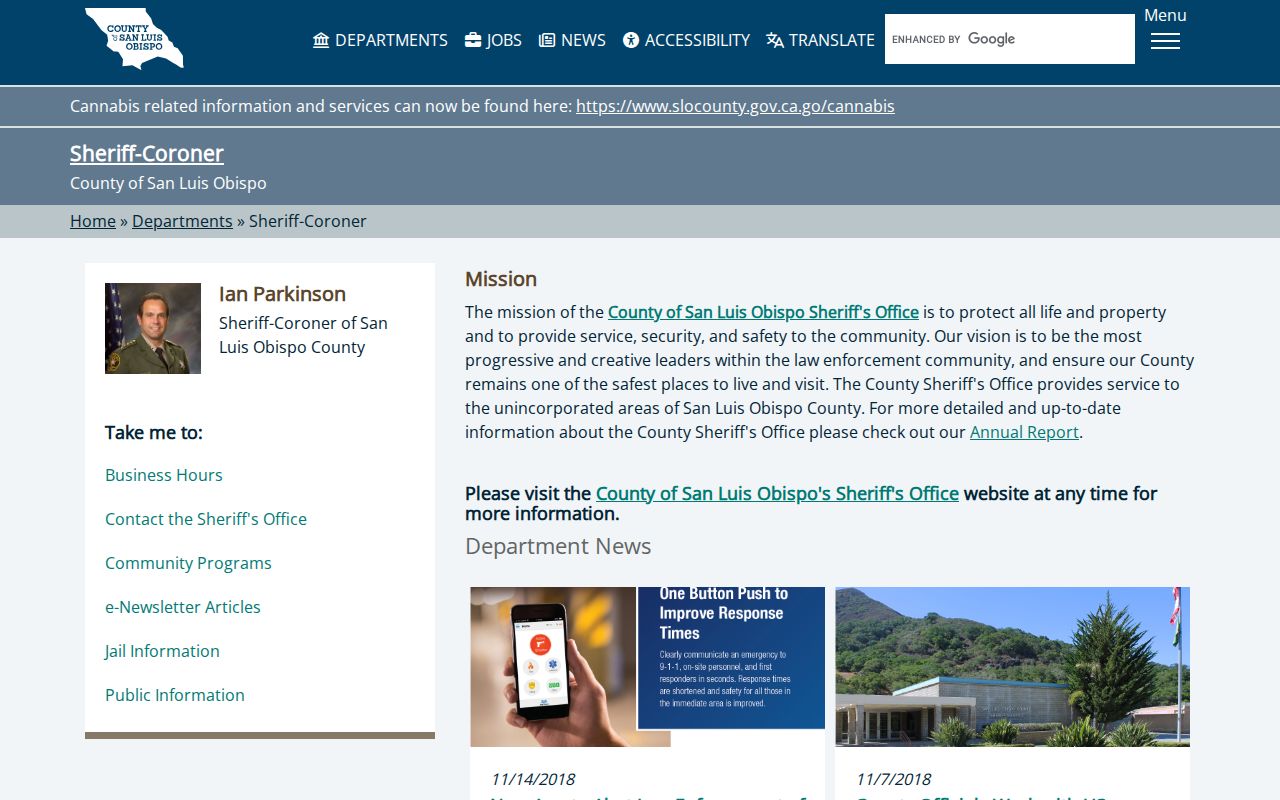
City police records stay with the city at the report stage, even when a later booking or court case moves into county systems.